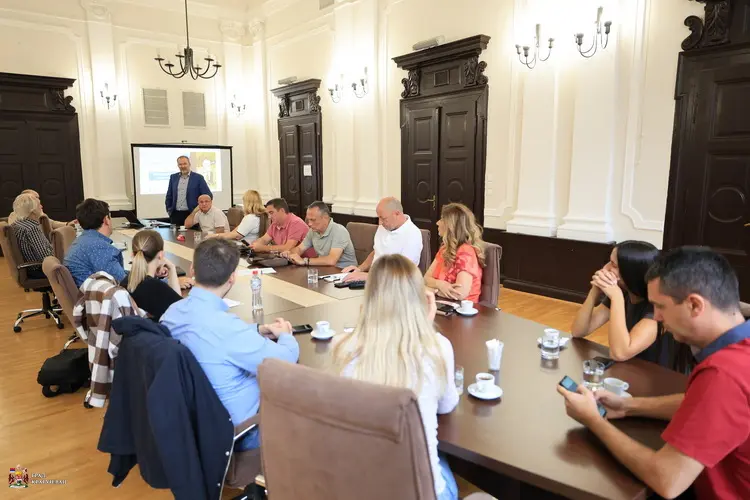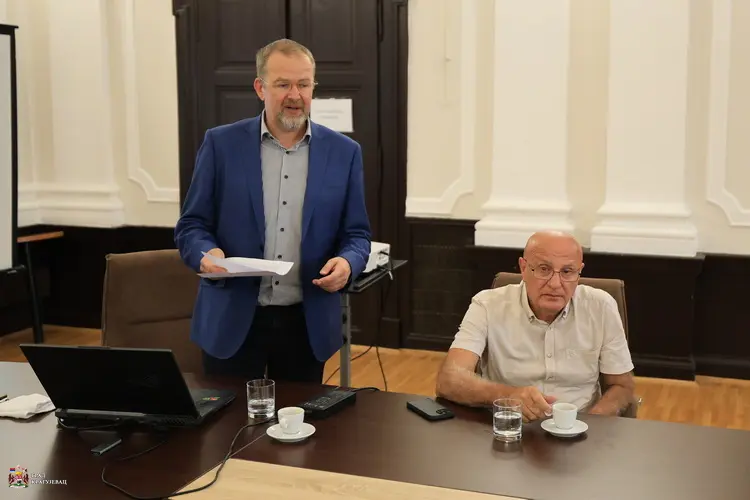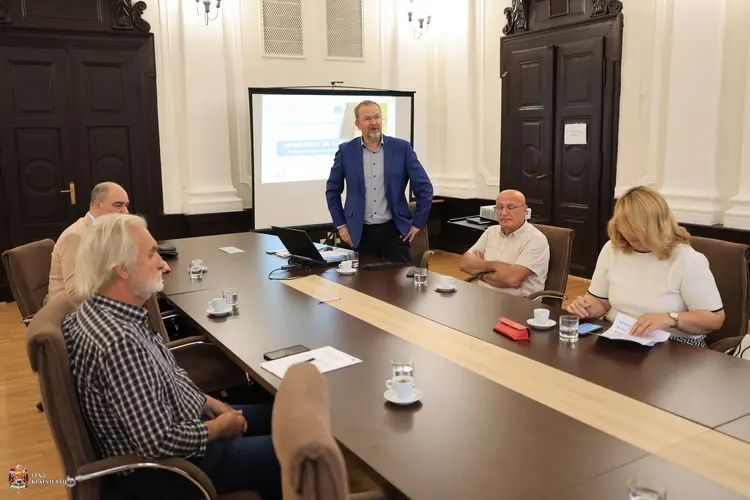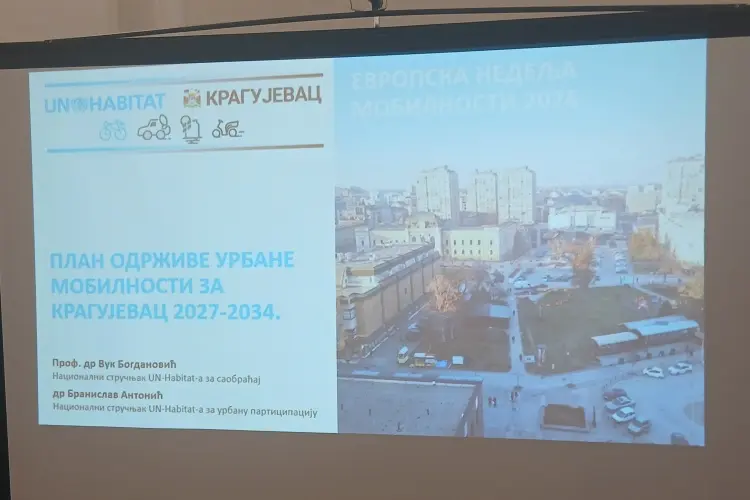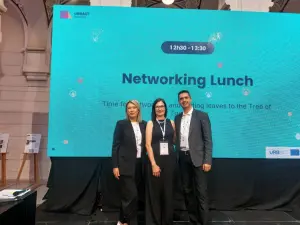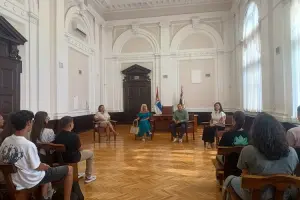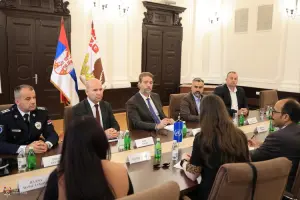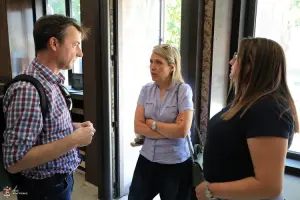

European Mobility Week was marked in Kragujevac with presentations of the City of Kragujevac Sustainable Urban Mobility Plan (SUMP), prepared with the support of City representatives by Prof. Dr Vuk Bogdanović and Dr Branislav Antonić, national coordinators involved in the preparation of the SUMP within the UN-Habitat project and the EU INTERREG PARSMO and IN MOBILITY projects, as well as other programs, strategies and plans in the field of sustainable urban mobility in which the City of Kragujevac participates.
The City of Kragujevac is once again taking part in this major European initiative, which is held from 16 to 22 September in numerous cities across Europe. This year’s theme is “Mobility for Everyone - Intergenerational Fairness”, with the slogan “Move Better”, while the aim is to create a mobility system adapted to all age groups, meeting the needs of both current and future generations and making urban mobility significantly more inclusive.
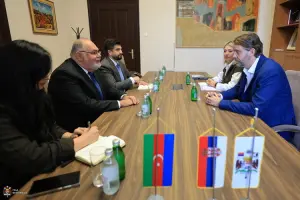
Kragujevac Chief City Planner Ivan Radulović pointed out that this is the European Union’s largest campaign dedicated to this topic. Referring to the focus of the initiative, Radulović stressed the importance of intergenerational equality, which the European Commission has identified as one of its priorities. This means that alternative modes of transport, which compete with conventional car traffic, must be accessible to all generations, from a seven-year-old child who walks or cycles to school independently to older residents who need to meet their everyday, healthcare or cultural needs, Radulović said, adding that barriers to mobility and so-called “mobility poverty”, which particularly affects persons with disabilities, directly impact the quality of life of all citizens.
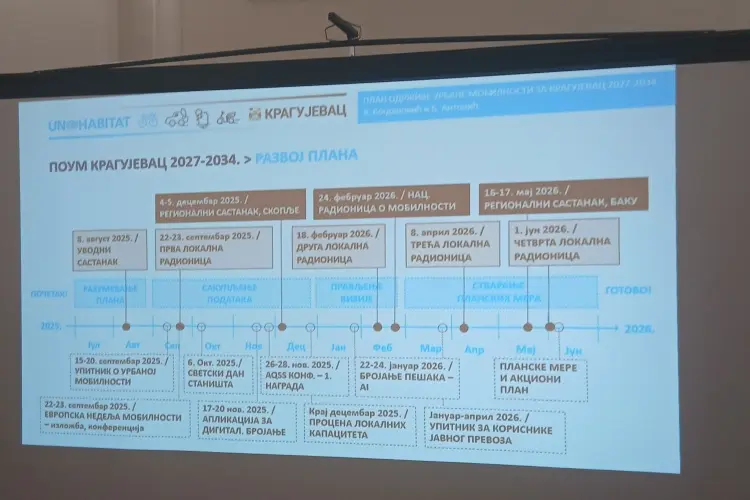
Presenting the Sustainable Urban Mobility Plan (SUMP), Prof. Dr Vuk Bogdanović pointed out that it is a strategic document whose preparation took more than a year as part of the UN-Habitat project. He stressed that such a plan is mandatory for cities the size of Kragujevac, as it enables access to international and European funds intended to improve transport infrastructure. In addition, Bogdanović noted that the results and experience from Kragujevac have already been successfully presented at international conferences and the World Urban Forum as an example of good practice.
Urban participation expert Dr Branislav Antonić pointed out that more than 500 residents were involved in the preparation of the strategic document through surveys and workshops. He stressed that the aim of these projects is to create better conditions for pedestrians and cyclists and to remove barriers for the most vulnerable groups. Mobility does not exist only while a plan or project is being developed; it is something we all need every day. We know how heavily our cities are burdened by cars and how much we all want clear pedestrian routes and better conditions for cycling, Antonić said.