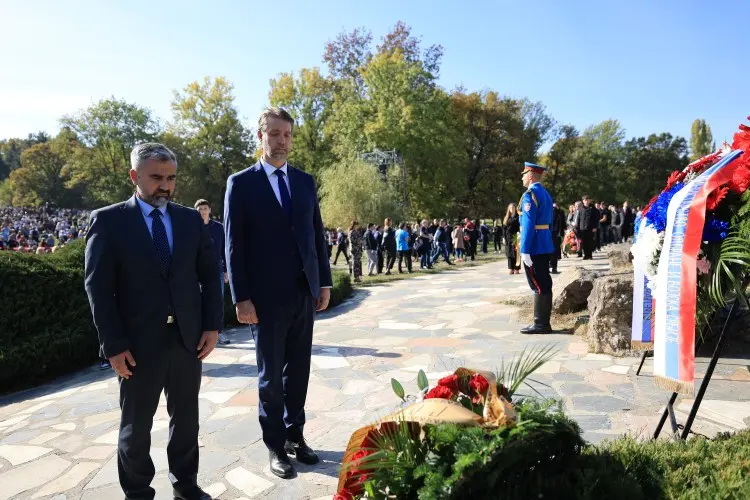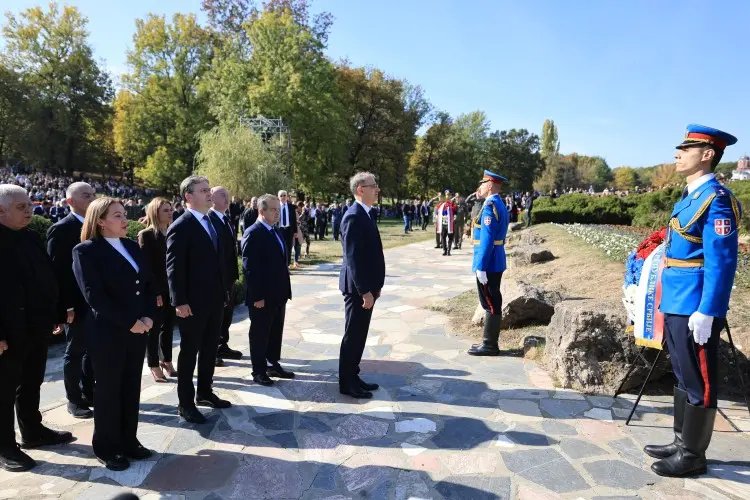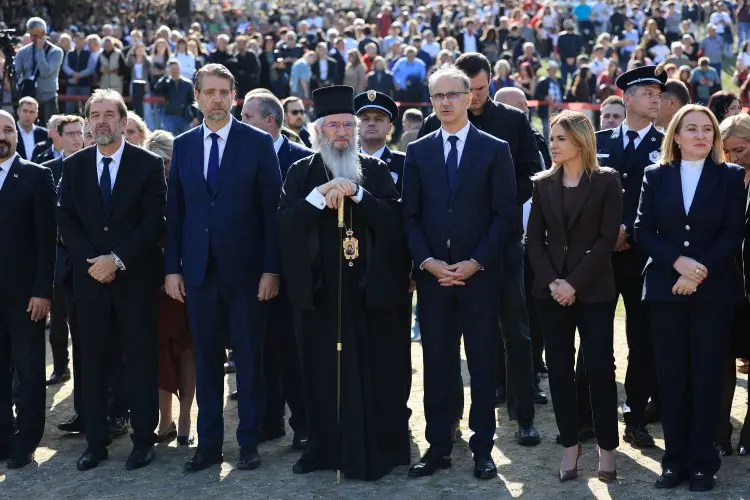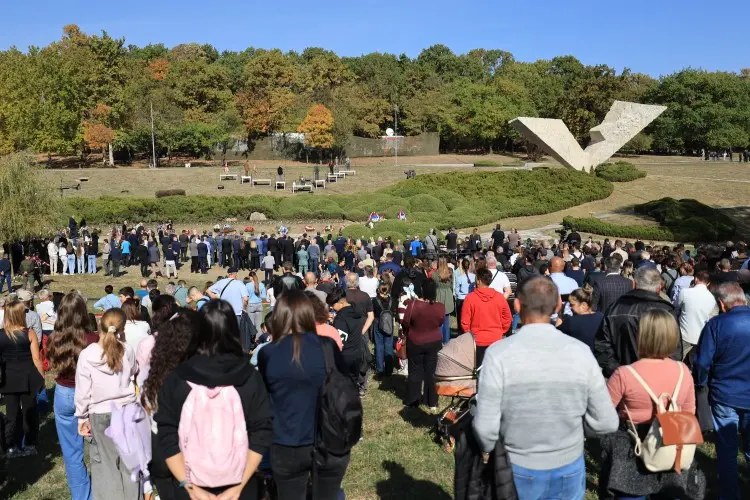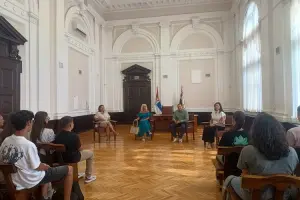

This year, the Great School Class, the traditional anti-war event through which Kragujevac preserves the memory of the innocent victims executed on 21 October 1941, once again conveyed powerful messages of peace, while recalling the young lives cut short and the suffering of the innocent civilian population.
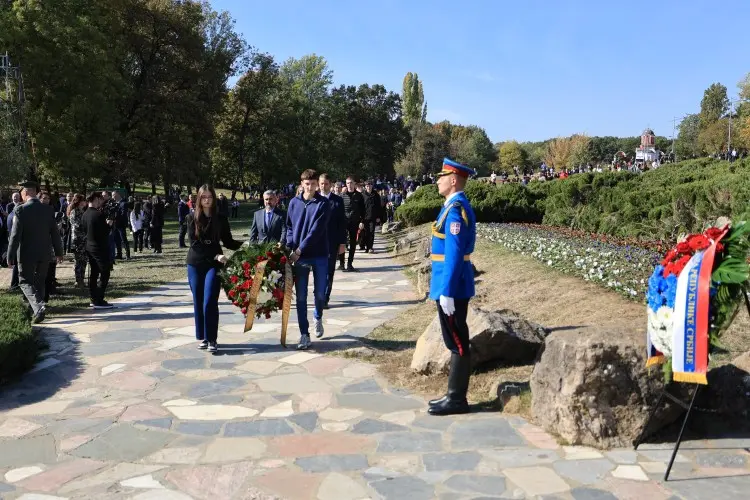
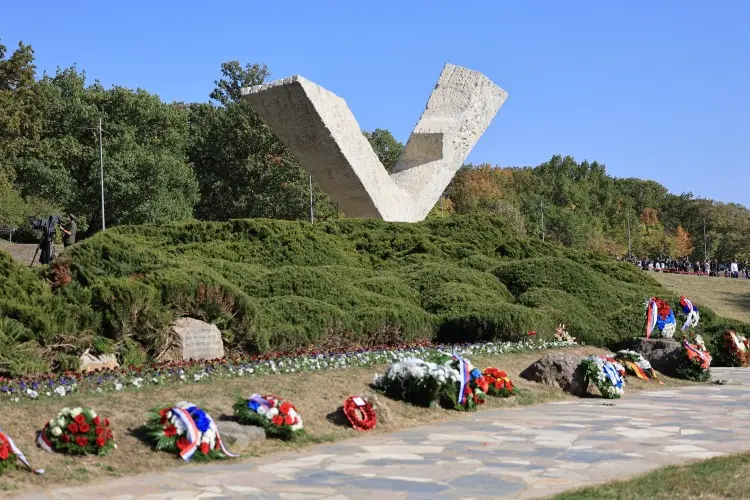
Wreaths at the Monument to the Executed Students and Teachers in Šumarice were laid by teachers and students of the First Grammar School; Đuro Macut, Prime Minister of the Republic of Serbia in a caretaker capacity, accompanied by caretaker ministers Nikola Selaković, Ivica Dačić, Milica Đurđević Stamenkovski, Nenad Vujić, Snežana Paunović, Nenad Popović and Boris Bratina; Kragujevac Mayor Nikola Dašić and City Assembly President Ivica Momčilović; as well as representatives of the Federation of Associations of Veterans of the National Liberation Wars of Serbia (SUBNOR), the diplomatic corps, Kragujevac’s partner and sister cities, the University, national and city institutions, associations, organizations and political parties.
One of the greatest tragedies endured by our people took place here in Kragujevac, where people were executed, many of them children and school pupils. They were the future of our country, which the enemy sought to destroy. For when you destroy a people, you destroy its culture and education, and thereby the future of that country,” said Nenad Vujić, caretaker Minister of Justice, emphasizing that nurturing a culture of remembrance helps us understand who we are and where we are going.
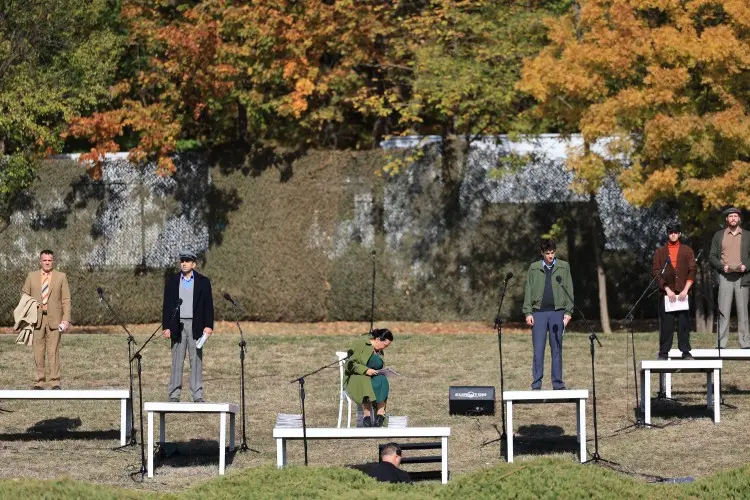
This year’s Great School Class featured the performance of the poem “The Smell of Weapons and the Sky”, written by Vesna Kapor and directed by Ana Đorđević.
In my book, which is both a poem and prose, the narrative unfolds from three perspectives. These are the voices of the victims, the voices of the survivors, and the voices of their relatives and loved ones who searched for them. The challenge for me was to bring these people to life, to bring them back among us as they might have been and as I imagine they were, so that they would not remain merely numbers and statistics to which we return from time to time, but that we would remain aware that they were living human beings from whom an entire city could have emerged, Vesna Kapor explained, adding that she felt an immense sense of responsibility and respect towards this subject.
Speaking about the broader context of the atrocities, the author also recalled the crimes committed in Šabac, Gornji Milanovac and Kraljevo, as well as the suffering in Herzegovina, where killings and executions had begun as early as August 1941.
Once again, the Great School Class has reaffirmed that remembering the innocent victims is not merely a look back at the past, but also a lasting reminder and a call to future generations to preserve peace, dignity and the value of human life.