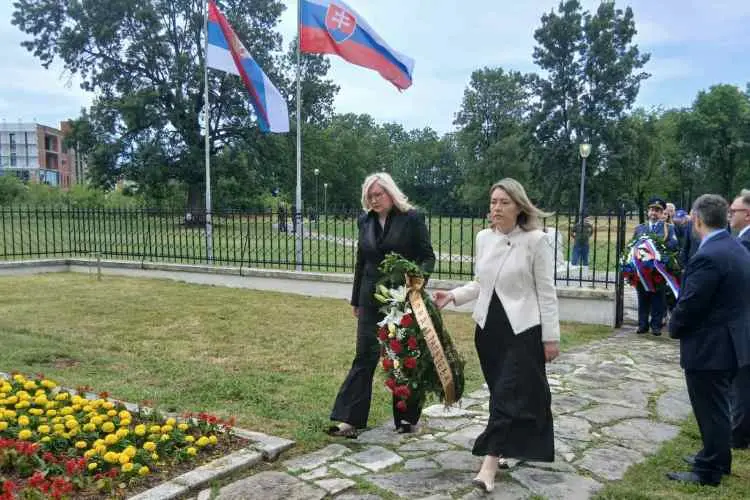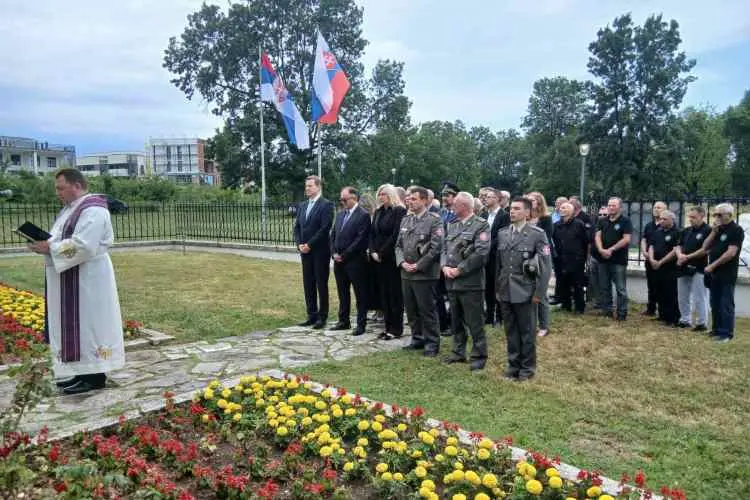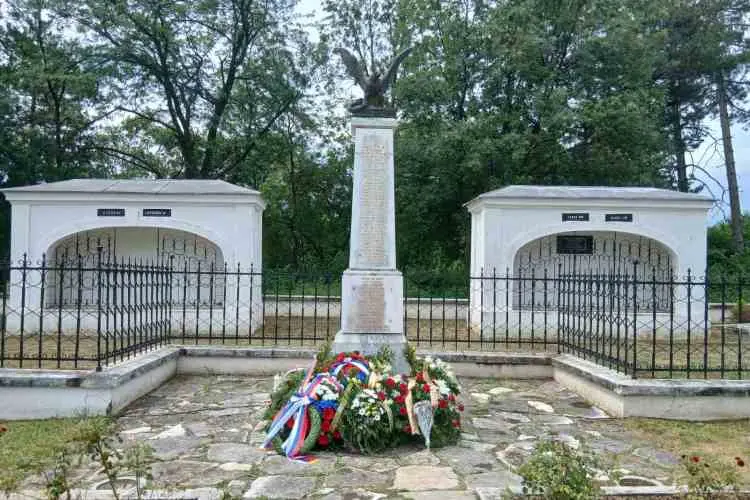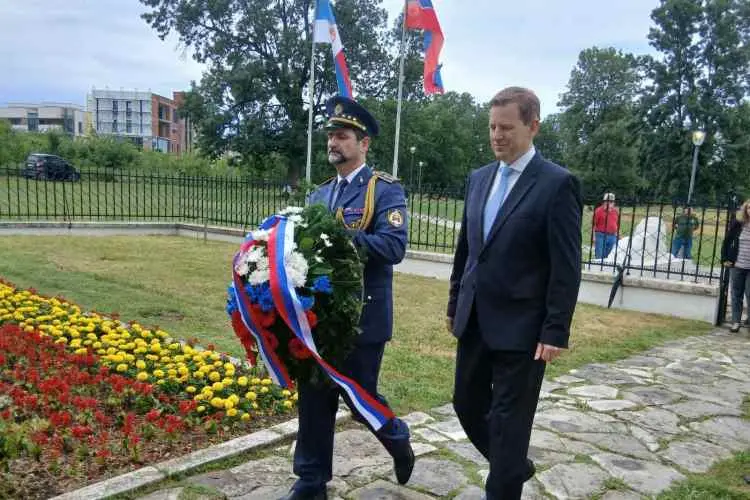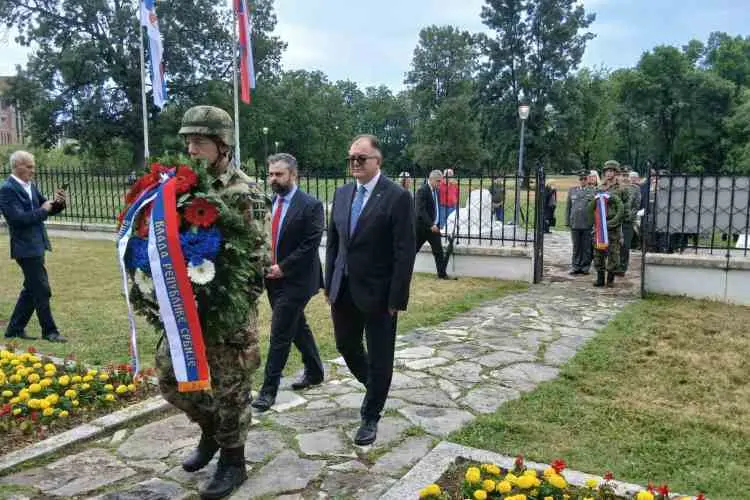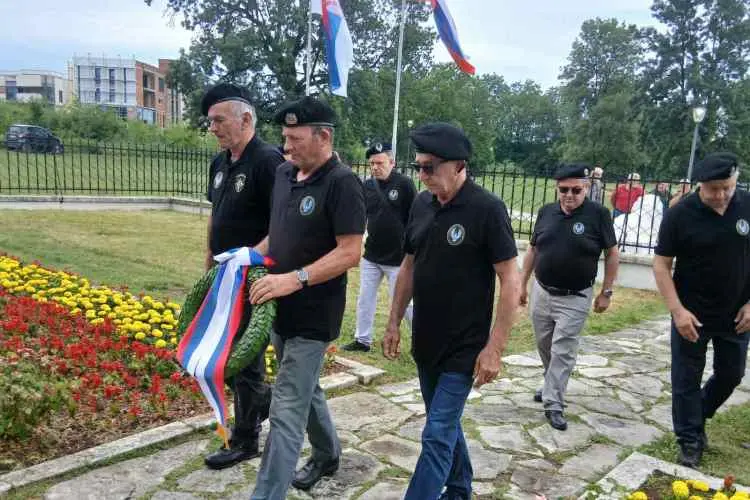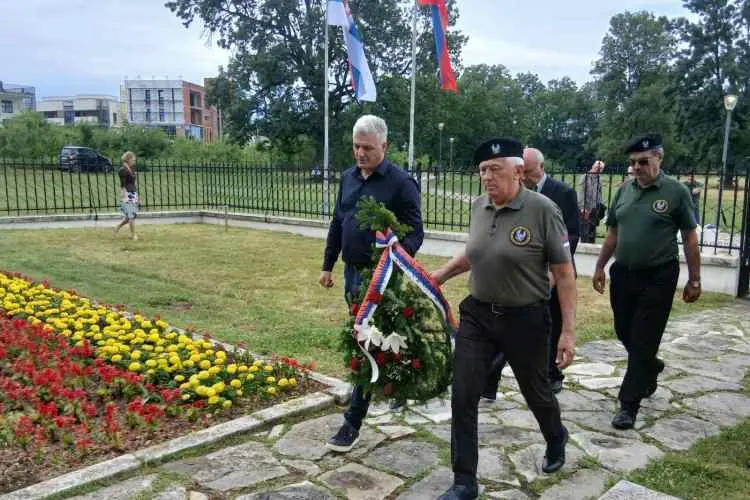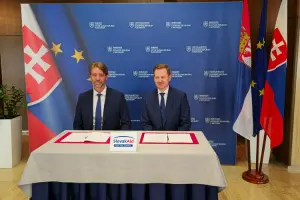

By laying wreaths at the monument in the memorial complex known as the “Slovak Cemetery” and paying tribute to the members of the 71st Infantry Regiment who, in 1918, refused to carry out orders and raised their voices against the futility of war, Kragujevac marked the 108th anniversary of the execution of 44 Slovak soldiers. The state commemorative ceremony was attended by H.E. Mr. Michal Pavúk, Ambassador of the Slovak Republic to Serbia; Zoran Antić, State Secretary at the Ministry of Labour, Employment, Veteran and Social Affairs; Nada Milovanović, Deputy President of the City Assembly of Kragujevac; Danka Andonovski, City Council Member for International Cooperation and Local Self-Government; as well as representatives of institutions, veterans’ associations and civic associations.
Addressing those present, H.E. Michal Pavúk, Ambassador of the Slovak Republic to Serbia, emphasized that this place reminds us that history is not merely a collection of dates and events, but a tapestry woven from human lives and destinies.
By preserving the memory of those who lost their lives in difficult historical circumstances, we reaffirm our commitment to peace, freedom and solidarity among people and nations. The ties between Serbia and Slovakia have been built on mutual respect, cooperation and the conviction that peace, freedom and human dignity are values that must be safeguarded and passed on to future generations, Ambassador Pavúk said, thanking the City of Kragujevac for its decades-long care for the resting place of the Slovak soldiers.
The memorial complex “Slovak Cemetery” is the most important point of connection between our two peoples, a symbol of brotherly ties and of our shared aspiration to live in peace and in a better world. Standing before this monument, we pay tribute not only to those who perished, but also to the idea that peace has no alternative, said Nada Milovanović, Deputy President of the City Assembly, stressing that every generation has a duty to choose reason over hatred, dialogue over conflict, and humanity over violence.
State Secretary Zoran Antić recalled the historical significance of the uprising of the members of the 71st Trenčín Regiment and their decision to stand up against injustice and the madness of war.
Mindful of their Slavic roots, and of the brotherhood and friendship they shared with the Serbian people, the soldiers of the 71st Trenčín Regiment found the strength to resist Austrian and Hungarian officers precisely here in Kragujevac - a city that throughout its history has stood as a symbol of resistance to tyranny, a city of Serbia’s first capital and the Sretenje Constitution, but also a city whose executed schoolchildren became a symbol of anti-fascism in Europe and around the world, said Antić, recalling that Trenčín, too, is home to a memorial dedicated to fallen Serbian soldiers, and that it is precisely such places of remembrance that represent a lasting bond between Serbia and Slovakia - one that has, over time, grown into a sincere friendship between the two peoples.
This year’s commemorative ceremony at the “Slovak Cemetery” once again confirmed the importance of nurturing a culture of remembrance and preserving the historical ties between Serbia and Slovakia, as well as their shared commitment to the values of peace, freedom and mutual understanding.